


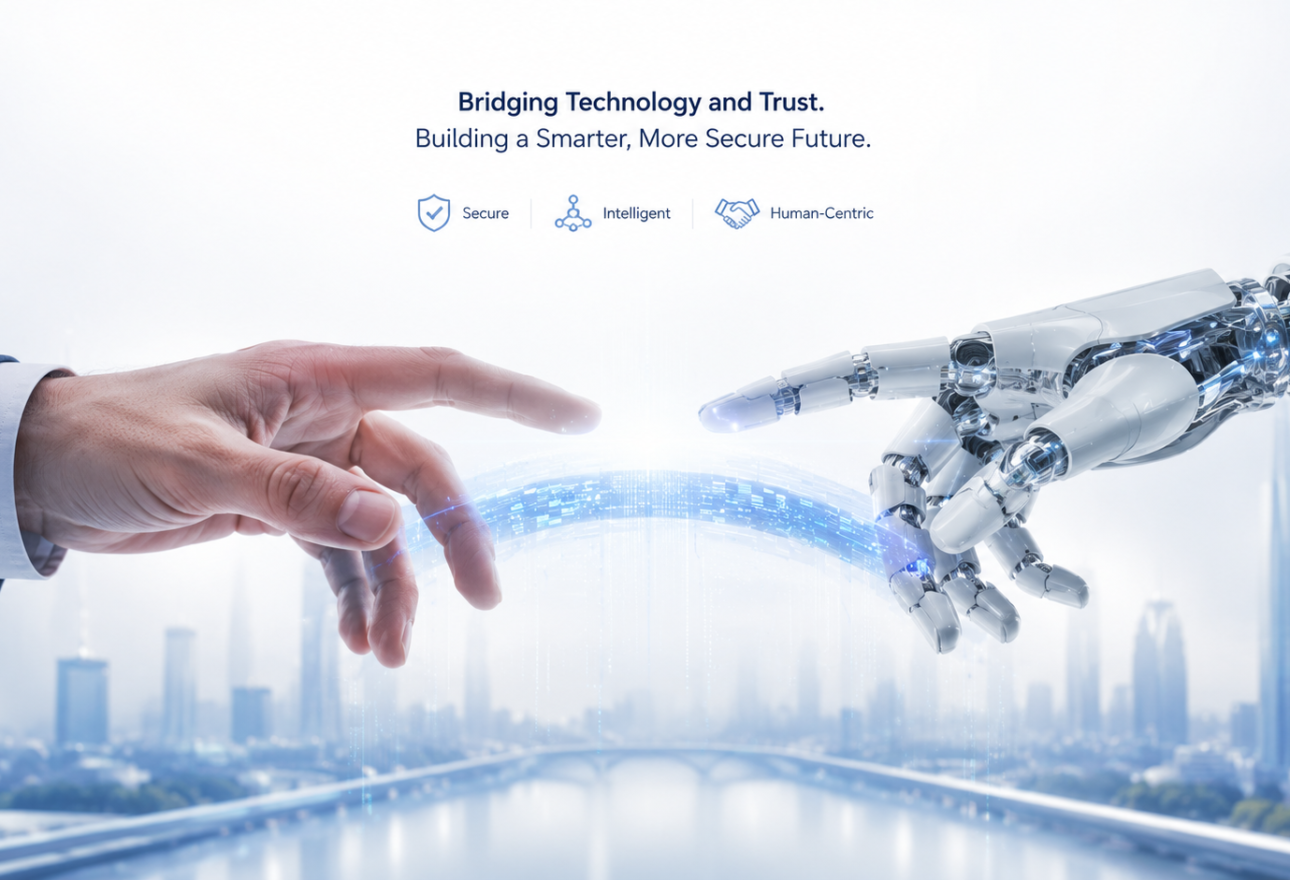
Are we building the future, or just racing toward it?
By The CEO, QwikLive · Published June 2026
A founder’s perspective on AI, banking, trust, sovereignty, and the next generation of intelligent platforms.
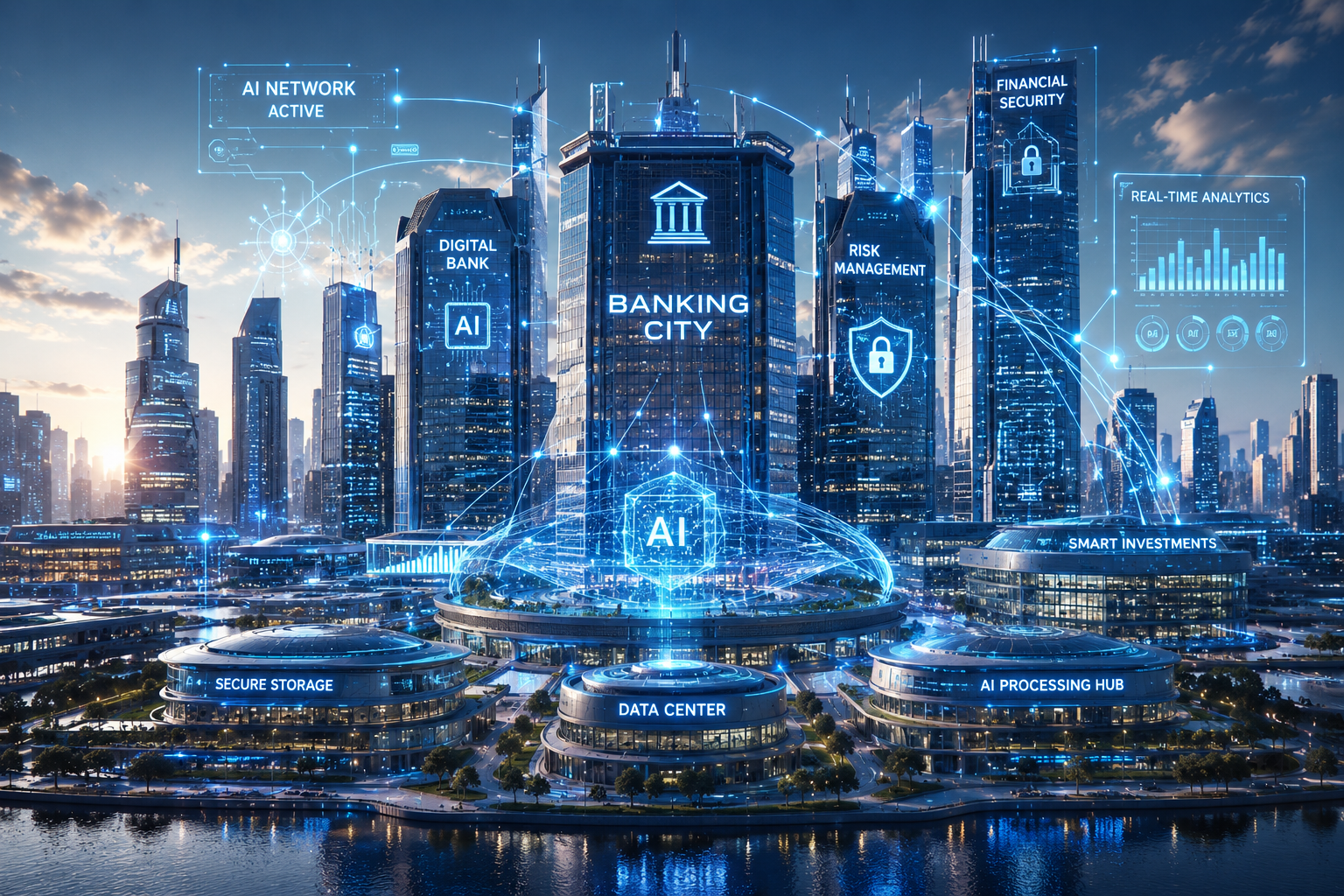
Over the last few years, I have witnessed something extraordinary. Artificial intelligence has changed the definition of speed itself — in how we build software, design products, automate decisions, and create experiences. Everything is accelerating.
At QwikLive, we have spent years building a banking-grade Platform-as-a-Service and Software-as-a-Service platform with security and compliance at its foundation — including PCI DSS 4.x and SOC 2 controls. Now, like every technology company, we are looking at the next frontier: agentic AI, intelligent workflows, and the Model Context Protocol. But before we jump into the next wave, I believe we need to ask ourselves some fundamental questions. Not the questions a vendor wants us to ask. The questions a founder, an operator, and a regulator would all ask in the same room.Part 01 — The shift
A computing economy, or an agility economy?
Q.01
Is AI winning because machines can compute more — or because organizations can finally move faster?
The honest answer matters. It changes what you invest in, who you hire, and how you measure return.
For decades, competitive advantage came from infrastructure, people, and processes. Today, it is shifting toward how quickly an organization can imagine, build, validate, and deliver. AI has given organizations a new operating model.
But speed alone cannot be the definition of success — especially not in industries where a single misfired decision can move money, identity, or trust in the wrong direction.
Part 02 — The motive
Are we building, or are we racing?
Q.02
Is this innovation, or a global race driven by fear of missing out?
Every company today feels pressure to announce an AI strategy. Every board includes it. Every roadmap mentions it.
Are we adopting AI because it creates meaningful business outcomes — or because we are afraid of being left behind? The biggest risk is not missing the AI wave. The bigger risk is implementing AI without understanding where control, responsibility, and accountability should remain.
Part 03 — The concentration question
When the world’s intelligence lives in a few places.
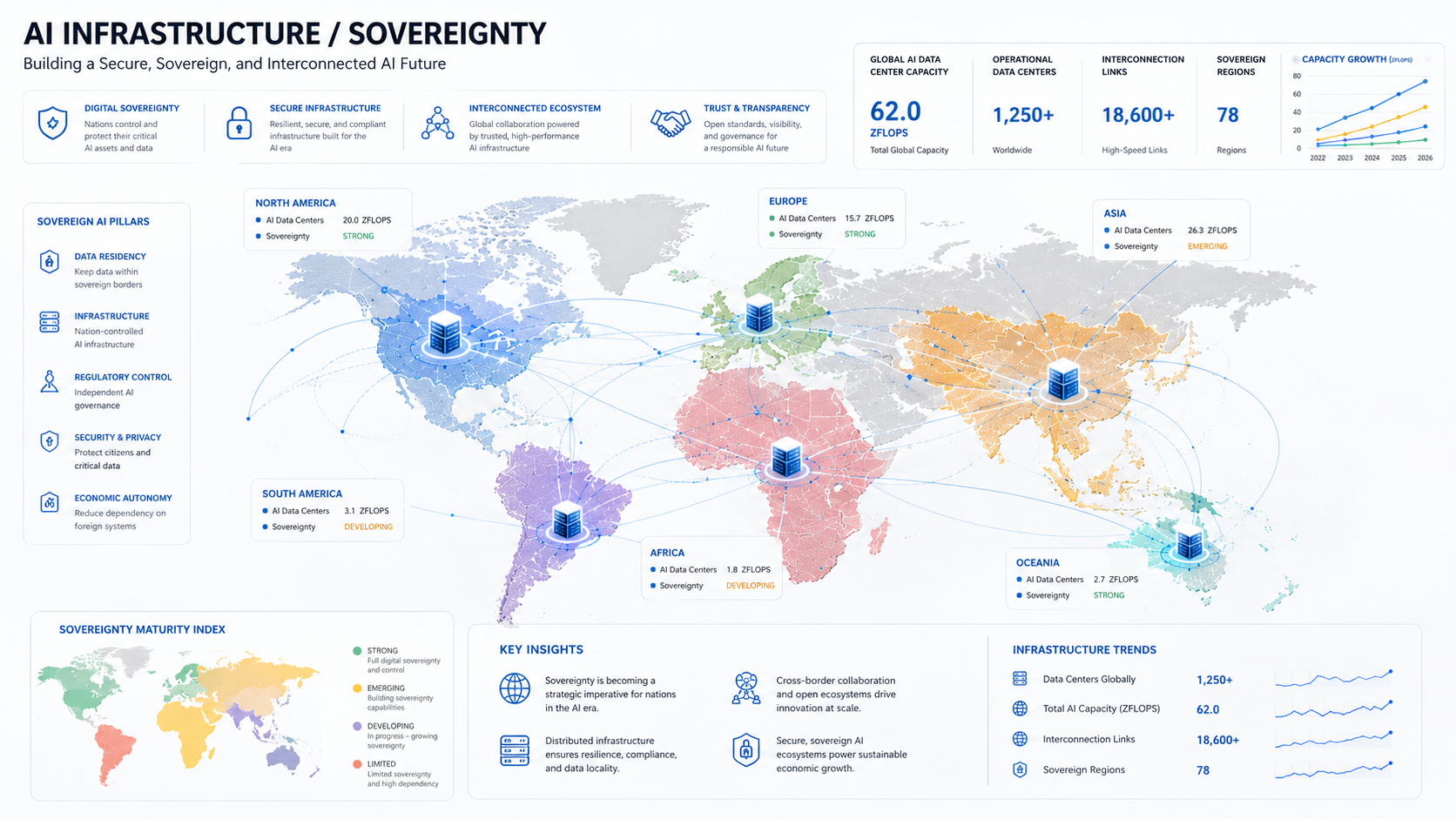
The world's frontier AI capacity is concentrated in a handful of regions and providers. That is a strategic fact, not a neutral one.
Q.03
What happens when the world’s intelligence infrastructure is concentrated in a few locations?
The progress made by large language models has been remarkable — billions of parameters, trillions of tokens, massive computing infrastructure. The innovation is undeniable. But every technology dependency creates a strategic question.
How sustainable is it for businesses, governments, and entrepreneurs to build critical capabilities on infrastructure controlled by limited ecosystems? What happens when availability, regulation, geopolitical conditions, or access policies change?
Data sovereignty is becoming one of the most important conversations of our generation — and many organizations are moving so quickly in the AI race that they may not be spending enough time thinking about long-term dependency.
Part 04 — The banking question
Can AI become the control plane?
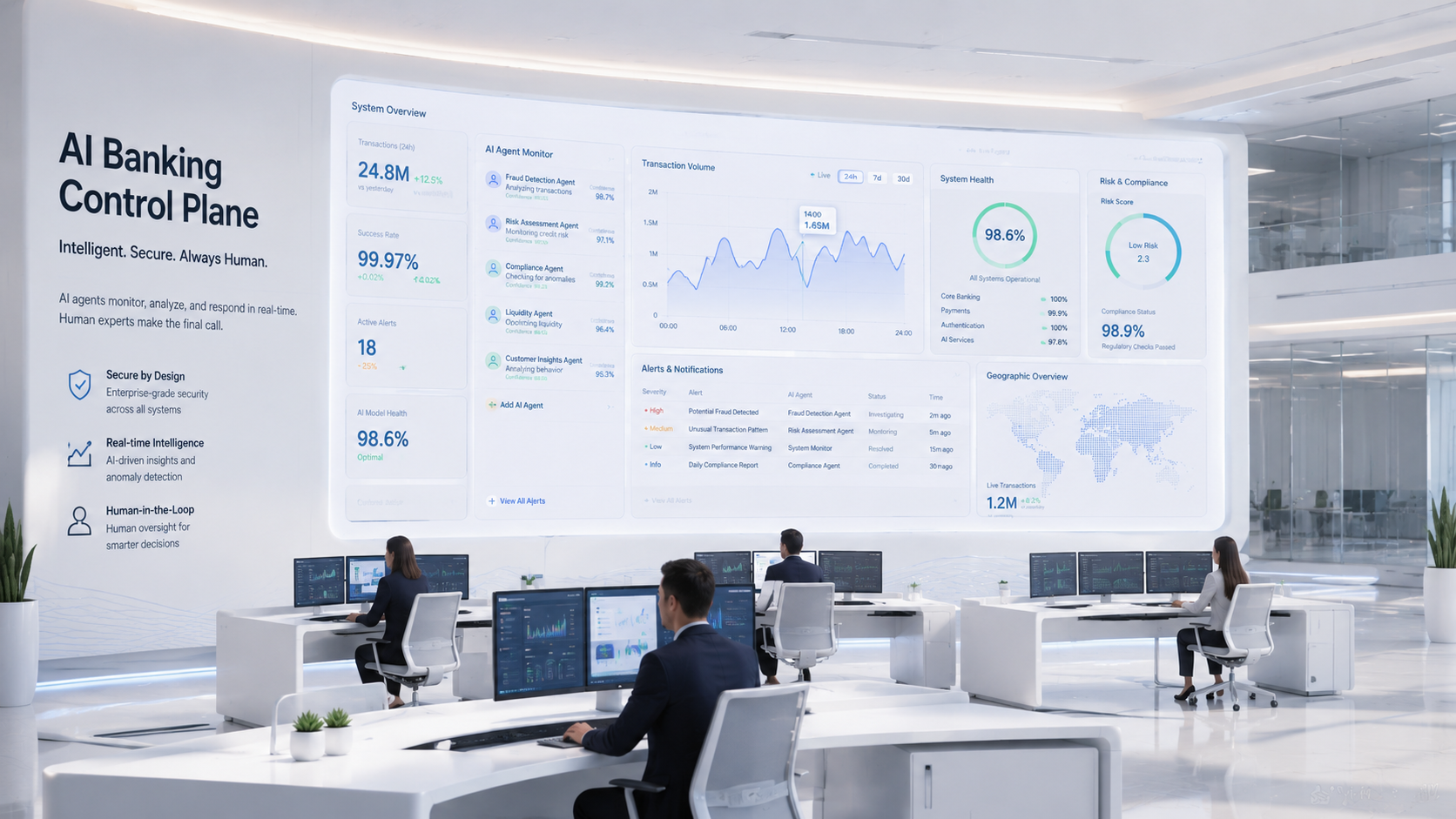 Human-in-the-loop is not a constraint on AI in banking. It is the architecture
Q.04
Human-in-the-loop is not a constraint on AI in banking. It is the architecture
Q.04
Would a bank allow an AI system to independently control customer transactions, payments, and financial decisions?
Banking is different. A recommendation engine can make mistakes. A payment system cannot. A banking platform cannot simply optimize for speed — it must optimize for trust.
The future of banking AI will require a balance between automation and oversight. Five things, all at once:
- AI-driven automation, where it is safe and measurable.
- Human approval workflows for anything that moves money or risk.
- Transparent decision-making that a regulator can read.
- Auditability across every model, prompt, and action.
- Compliance treated as a first-class design constraint, not a bolt-on.
Part 05 — The architecture problem
Deterministic systems meet probabilistic intelligence.
Q.05
Can probabilistic intelligence safely operate deterministic financial infrastructure?
The ledger
Deterministic
A transaction either succeeds or fails. A balance either exists or does not. There is no “approximately.” Banking has spent a century making this so.The model
Probabilistic
AI predicts, recommends, and reasons over patterns. It is brilliant at ambiguity — and ambiguity is exactly what a payment rail cannot tolerate.The opportunity is not replacing deterministic systems with probabilistic ones. The opportunity is augmenting deterministic systems intelligently — letting AI handle the reasoning, while the ledger remains the source of truth.
Part 06 — Where the value is
The biggest wins are amplification, not replacement.
I believe the biggest opportunities are not necessarily replacing humans. They are amplifying human capability.
- Automated engineering and testing.
- Intelligent operations assistance.
- Workflow optimization across the back office.
- Customer service augmentation, not substitution.
- Risk analysis support for human reviewers.
- Compliance automation that documents itself.
- Developer productivity acceleration, end to end.
AI should expand human capability — not remove human accountability
Part 07 — Our approach
Experiment aggressively. Operate responsibly.
As an entrepreneur, I cannot ignore AI. The productivity gains are real. The acceleration in product development is real. The possibilities are enormous. But for mission-critical industries — banking, payments, financial services — the path forward must be thoughtful.
